
 By admin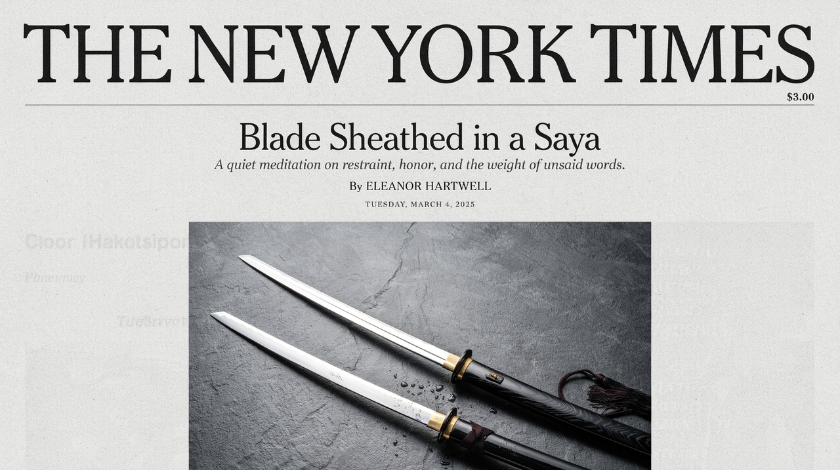
Crossword puzzles often introduce players to fascinating words, cultures, and historical concepts that they may not encounter in everyday life. One such clue that recently appeared in the New York Times Crossword was “Blade sheathed in a saya.” For many solvers, the answer was not immediately obvious. The correct solution, Katana, refers to one of the most iconic weapons in Japanese history.
What makes this clue particularly interesting is that it combines language, culture, and history into a single puzzle entry. The word saya is not commonly used in English conversation, yet it plays an important role in traditional Japanese swordsmanship. Understanding the relationship between a katana and its saya provides insight into centuries of Japanese craftsmanship and samurai tradition.
Whether you’re a crossword enthusiast looking for clue explanations or someone interested in Japanese culture, exploring the meaning behind this clue reveals a rich story that extends far beyond six simple letters.
What Is a Katana?
The katana is a traditional Japanese sword characterized by its curved, slender blade and long grip. Developed over hundreds of years, it became the primary weapon of the samurai class and remains one of the most recognizable swords in the world.
Unlike many European swords, the katana was designed for speed, precision, and efficiency. Its slightly curved blade allowed for smooth drawing and cutting motions. This design made it highly effective in combat and contributed to its legendary status throughout Japanese history.
The katana was more than just a weapon. Samurai often viewed their swords as extensions of their spirit and identity. In fact, historical records describe the sword as the “soul of the samurai.” Skilled swordsmiths spent months crafting a single blade, using specialized techniques that combined strength, flexibility, and beauty.
Today, authentic katanas are admired not only for their historical significance but also for their artistic value. Museums, collectors, and martial artists around the world continue to study and appreciate these remarkable weapons.
What Is a Saya?
A saya is the traditional scabbard used to protect and carry a Japanese sword. Most commonly made from lightweight wood and finished with lacquer, the saya serves several practical and symbolic purposes.
At first glance, the saya may appear to be a simple sheath. However, its design is carefully engineered to protect the blade from moisture, dust, and damage. Because Japanese swords are highly polished and meticulously maintained, proper storage is essential. The saya helps preserve the sword’s condition while allowing it to be carried safely.
The saya also contributes to the aesthetic beauty of the sword. Many historical examples feature intricate lacquer work, decorative fittings, and artistic craftsmanship. Some were simple and functional, while others reflected the status and wealth of their owners.
When crossword clues mention a “blade sheathed in a saya,” they are specifically referring to a Japanese sword stored within this traditional scabbard. Since the katana is the most famous Japanese sword, it becomes the logical answer to the clue.
Why the NYT Crossword Used This Clue
The New York Times Crossword is known for challenging players with clues that test both vocabulary and general knowledge. The clue “Blade sheathed in a saya” is a perfect example because it rewards familiarity with cultural terminology rather than relying solely on common English words.
Crossword constructors frequently incorporate references to history, geography, literature, science, and international cultures. This variety helps keep puzzles engaging while encouraging solvers to learn new concepts. In this case, understanding the word “saya” leads directly to knowledge about Japanese swords.
Another reason the clue works well is its precision. A saya is strongly associated with Japanese blades, and among those blades, the katana is the most widely recognized. This creates a fair and satisfying puzzle experience for solvers who can make the cultural connection.
For many players, solving clues like this becomes one of the most rewarding aspects of crossword puzzles. They transform the puzzle from a simple word game into an opportunity for learning and discovery.
The Cultural Legacy of the Katana
Few weapons in history have achieved the cultural status of the katana. Through films, books, television series, martial arts, and video games, the sword has become a global symbol of discipline, honor, and craftsmanship.
Japanese sword-making techniques have been passed down through generations. Traditional swordsmiths use specialized forging methods that involve folding and shaping steel multiple times. These techniques create blades renowned for their strength and sharpness.
The katana’s influence extends beyond military history. It appears in countless works of fiction and continues to inspire artists, collectors, and martial arts practitioners worldwide. Even people with no direct connection to Japanese culture often recognize the silhouette of a katana instantly.
This widespread recognition helps explain why the word frequently appears in crossword puzzles. It combines cultural significance, distinctive spelling, and broad public awareness, making it an ideal puzzle answer.
Conclusion
The New York Times Crossword clue “Blade sheathed in a saya” may seem simple at first, but it opens the door to a fascinating exploration of Japanese history and craftsmanship. The answer, Katana, refers to one of the world’s most famous swords, while the saya serves as its traditional protective scabbard.
Understanding these terms enriches the crossword-solving experience and provides valuable cultural knowledge. The next time you encounter a clue involving a saya, samurai, or Japanese weaponry, you’ll know exactly why the answer points to the legendary katana.
Crossword puzzles often teach us something new, and this clue is a perfect reminder that even a six-letter answer can carry centuries of history behind it.