
 By admin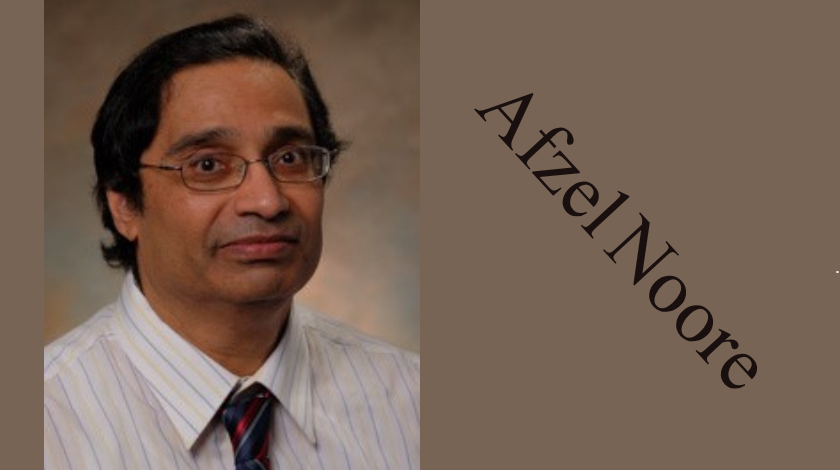
Dr. Afzel Noore is an electrical engineer, computer scientist, and academic researcher recognized for his work in artificial intelligence, biometrics, machine learning, computer vision, software reliability, and information fusion. He earned his Bachelor of Engineering in Electronics and Communication Engineering from the University of Madras in 1977, followed by a Master of Science in Electrical Engineering from the Indian Institute of Technology (IIT) Madras in 1981. He later completed a Ph.D. in Electrical Engineering at West Virginia University in 1987.
His educational path reflects a strong foundation in electronics, digital systems, and computational engineering. Before entering academia full time, he worked as a product development engineer at Philips India, contributing to the development of microprocessor-based measurement devices. This early industry experience influenced his later research by combining theoretical engineering principles with practical technological applications.
Engineering Foundation
Throughout his career, Dr. Noore has emphasized interdisciplinary research, blending electrical engineering with artificial intelligence and pattern recognition. His work spans both fundamental research and practical applications in security, healthcare, image processing, and intelligent systems.
Professional Career
West Virginia University
Dr. Noore spent several decades at West Virginia University (WVU), progressing from Assistant Professor to Professor in the Department of Computer Science and Electrical Engineering. He also served in several academic leadership roles, including Associate Dean for Academic Affairs, Special Assistant to the Dean, and Associate Chair for Academic Affairs. During his tenure, he supervised graduate students, secured competitive research funding, and collaborated with researchers in machine learning and biometrics.
Texas A&M University–Kingsville
Since 2018, Dr. Noore has served as Associate Dean for Undergraduate Affairs at Texas A&M University–Kingsville’s Frank H. Dotterweich College of Engineering. He has also held interim leadership positions as Chair of the Department of Electrical Engineering & Computer Science and the Department of Industrial Management & Technology. His administrative work complements his active research in artificial intelligence, adversarial machine learning, and computer vision.
Research Interests
Artificial Intelligence
Artificial intelligence forms one of the central themes of Dr. Noore’s research. His work explores intelligent algorithms capable of learning from complex datasets while improving decision-making in uncertain environments. Recent publications include research on federated learning, edge intelligence, and secure AI systems, demonstrating continued engagement with modern AI challenges.
Biometrics and Computer Vision
Dr. Noore is especially well known for his contributions to biometric authentication, including fingerprint recognition, face recognition, iris recognition, multimodal biometrics, and digital watermarking. His research has helped improve biometric accuracy by combining multiple identification methods through information fusion techniques. Several of his publications focus on enhancing recognition performance under real-world conditions where image quality may be poor or incomplete.
Software Reliability
Another major research area involves software reliability modeling. His studies apply neural networks, evolutionary computation, and statistical techniques to predict software failures and improve the dependability of complex systems. These contributions have influenced research in dependable computing and fault-tolerant system design.
Major Publications and Research Contributions
Biometrics
Dr. Noore has co-authored numerous influential papers covering:
- Fingerprint recognition
- Face recognition
- Iris recognition
- Multimodal biometric fusion
- Digital watermarking
- CAPTCHA security
His research frequently combines computer vision with artificial intelligence to create robust identity verification systems suitable for security-sensitive environments. Many publications appear in respected journals including Pattern Recognition, Information Fusion, IEEE Access, Signal Processing, and Applied Soft Computing.
Machine Learning
More recent work reflects growing interest in:
| Research Area | Example Applications |
|---|---|
| Federated Learning | Privacy-preserving AI |
| Edge Intelligence | Distributed computing |
| Neural Networks | Pattern recognition |
| Computer Vision | Image classification |
| Adversarial AI | Secure machine learning |
These topics demonstrate how his research has evolved alongside advances in artificial intelligence.
Information Fusion
A recurring theme in Dr. Noore’s publications is information fusion, which combines data from multiple sources to improve accuracy and decision-making. This work has applications in biometrics, robotics, surveillance, healthcare, and intelligent transportation systems.
Research Impact
Citations and Academic Metrics
According to publicly available academic profiles, Dr. Noore has authored more than 140 indexed publications, accumulated over 3,400 Scopus citations, and maintains an h-index above 30 on Scopus, reflecting sustained influence within computer science and engineering research. Citation counts vary slightly across databases such as Scopus and ResearchGate because each indexes publications differently.
Industry-Funded Research
His research has received funding from several prominent organizations, including:
- National Science Foundation (NSF)
- U.S. Department of Energy (DOE)
- U.S. Department of Justice
- General Electric (GE)
- Westinghouse
- Electric Power Research Institute (EPRI)
These collaborations highlight the practical value of his work beyond academia.
Awards and Professional Memberships
Throughout his academic career, Dr. Noore has remained active in professional organizations, particularly the Institute of Electrical and Electronics Engineers (IEEE). His leadership positions, research publications, and mentoring activities have contributed significantly to engineering education and interdisciplinary research.
Legacy and Future Research
As artificial intelligence continues transforming industries, researchers like Dr. Afzel Noore remain influential through their work on secure machine learning, trustworthy biometrics, and intelligent decision systems. His recent publications on federated learning and edge intelligence indicate an ongoing commitment to addressing emerging challenges in AI security, distributed computing, and privacy-preserving technologies.
His combination of administrative leadership, engineering expertise, and interdisciplinary research continues to shape both higher education and applied computer science.
Conclusion
Dr. Afzel Noore has built a distinguished career spanning academia, engineering, and artificial intelligence research. His contributions to biometrics, computer vision, software reliability, and information fusion have earned international recognition through extensive publications, citations, and research collaborations. From his early engineering work in industry to leadership roles at West Virginia University and Texas A&M University–Kingsville, his career reflects a commitment to advancing both research and engineering education. As AI and cybersecurity continue evolving, his work remains relevant to researchers and practitioners developing secure, intelligent systems.
FAQs
1. Who is Afzel Noore?
Dr. Afzel Noore is an electrical engineer and computer scientist known for research in artificial intelligence, biometrics, software reliability, and computer vision.
2. Where does Dr. Afzel Noore work?
He serves as the Associate Dean for Undergraduate Affairs at Texas A&M University–Kingsville.
3. What are his main research interests?
His work focuses on AI, machine learning, biometrics, computer vision, software reliability, information fusion, and cybersecurity.
4. Has Dr. Noore published research on biometrics?
Yes. He has published extensively on fingerprint recognition, face recognition, iris recognition, multimodal biometrics, and digital watermarking.
5. What organizations have funded his research?
His research has received support from organizations including the NSF, DOE, Department of Justice, GE, Westinghouse, and the Electric Power Research Institute.